Buy radwege.eu ?
We are moving the project
radwege.eu .
Are you interested in purchasing the domain
radwege.eu ?
domain@kv-gmbh.de · 0541-91531010
Buy radwege.eu ?
Is two-dimensional life possible?
Two-dimensional life as we typically think of it, with beings existing solely in a flat plane, is not possible based on our current understanding of physics and biology. Life as we know it requires a certain level of complexity and three-dimensional structure to function. However, it is theoretically possible to imagine simpler forms of life existing in a two-dimensional world, such as patterns or structures that can interact and evolve within a flat surface. **
What is a two-dimensional perspective?
A two-dimensional perspective refers to a way of representing objects or scenes on a flat surface, such as a piece of paper or a computer screen. This type of perspective lacks depth and only shows the length and width of objects, without representing their height or depth. It is commonly used in art, design, and graphics to create visual representations of objects and scenes. In a two-dimensional perspective, objects are typically depicted using techniques such as foreshortening, overlapping, and perspective to create the illusion of depth and distance. **

Similar search terms for Two-dimensional
Top-Angebote
Products related to Two-dimensional:
-
"Dimensional Crystal Vase, 5""H"Expertly crafted and designed, this crystal bud vase features a dimensional design that adds a touch of elegance to any space. Made of high-quality crystal, this vase is both beautiful and functional, perfect for displaying your favorite flowers.61,10 $*Shipping: 0,00 $Secure redirect to the provider
-
Alexander Home Heather Medallion Dimensional Area RugLight, serene, and breezy, this rug is power-loomed of polypropylene and polyester on a jute backing for wonderful durability. The airy and ethereal neutral color palette and motifs bring a casually elegant look to any decor for maximum designer...36,17 $*Shipping: 0,00 $Secure redirect to the provider



-
Should a one-dimensional or two-dimensional array be used for world coordinates?
A two-dimensional array should be used for world coordinates. World coordinates typically involve representing points in a two-dimensional space, such as on a map or a grid. Using a two-dimensional array allows for easy representation and manipulation of these coordinates, with each element in the array representing a specific point in the world. This makes it easier to perform operations such as finding neighboring points, calculating distances, and visualizing the world space. **
-
How can a two-dimensional array be converted into a one-dimensional array?
To convert a two-dimensional array into a one-dimensional array, you can simply concatenate all the rows of the two-dimensional array into a single row. This can be done by iterating through each row of the two-dimensional array and appending its elements to the one-dimensional array. Alternatively, you can use built-in functions or methods provided by programming languages to flatten the two-dimensional array into a one-dimensional array. **
-
How do you calculate the paths between vectors in a two-dimensional force field?
To calculate the paths between vectors in a two-dimensional force field, you can use the concept of line integrals. First, you need to parameterize the path between the two vectors using a parameter t. Then, you can calculate the line integral of the force field along the parameterized path. This involves taking the dot product of the force field vector and the tangent vector to the path, and integrating with respect to the parameter t. The result will give you the work done by the force field along the path between the two vectors. **
-
Is a shadow two- or three-dimensional?
A shadow is two-dimensional. It is the result of an object blocking light and creating a silhouette on a surface. A shadow does not have depth or volume, so it is considered to be two-dimensional. It only represents the outline or shape of the object that is blocking the light. **


Are complex numbers real two-dimensional vectors?
No, complex numbers are not real two-dimensional vectors. While complex numbers can be represented as points in a two-dimensional plane, they are not the same as two-dimensional vectors. Complex numbers have both a real and imaginary component, while two-dimensional vectors typically have both magnitude and direction. Additionally, complex numbers have their own operations and properties that are distinct from those of two-dimensional vectors. **
How do you calculate the cross product of two two-dimensional vectors?
To calculate the cross product of two two-dimensional vectors, you first need to extend the vectors into three dimensions by adding a zero as the third component. Then, you can calculate the cross product using the formula: \( \text{cross product} = (a_1b_2 - a_2b_1) \hat{k} \), where \( a_1 \) and \( a_2 \) are the components of the first vector, \( b_1 \) and \( b_2 \) are the components of the second vector, and \( \hat{k} \) is the unit vector in the z-direction. The resulting cross product will be a vector perpendicular to the plane formed by the original two vectors. **
Top-Angebote
Products related to Two-dimensional:
-
Batsford Stitch And Structure: Design And Technique In Two-And Three-Dimensional Textiles - Non Fiction - PaperbackTitle:. Stitch And Structure: Design And Technique In Two-And Three-Dimensional Textiles Format: Paperback. ISBN: [Not Provided] Overview:. Stitch and Structure stands as the definitive reference for textile designers, fashion technologists, and advanced craft practitioners seeking to master the architecture of fabric. This essential non-fiction paperback explores the complex relationship between stitch mechanics and structural integrity, revealing how two-dimensional surfaces evolve into rich, tactile textures or fully three-dimensional constructions. By decoding the science behind textile manipulation, the book empowers creatives to move beyond standard patterns and understand the underlying geometry that dictates drape, stretch, durability, and form. Whether you are developing innovative knitwear, creating sculptural art installations using thread, or researching sustainable manufacturing techniques, this volume provides the technical depth required to push boundaries. It bridges the gap between historical craftsmanship and modern textile innovation, offering a visual and conceptual toolkit for generating original ideas that rely on precise construction methods rather than decorative finishes alone. Buying this comprehensive guide ensures access to a wealth of knowledge that transforms how you approach materials from the fibre up. The publication addresses fundamental structures—from simple flatweaves and knit loops to complex bobbinetworks and multi-layered assemblies—demonstrating how variations in tension, alignment, and layering produce dramatically different physical properties. It serves as a critical resource for educational institutions and professional studios alike, documenting procedures that ensure reproducibility while fostering experimental freedom. For buyers looking to invest in their professional library, this book offers immediate practical value, reducing the time spent on failed prototypes by clarifying the cause-and-effect relationships between needle action, yarn behaviour, and final output. It is not merely a collection of images but a rigorous analysis of how structure generates function and aesthetic appeal in equal measure. The content supports readers who require a durable academic reference alongside creative inspiration, making it a high-value addition to any design workspace. What Makes This Book Stand Out:. Unlike generic pattern books, this work distinguishes itself through its analytical rigour and focus on structural logic rather than superficial motif replication. The standout feature is its dual examination of both two-dimensional surface enhancement and three-dimensional spatial construction within a single coherent framework. Readers benefit from a systematic breakdown of techniques such as loop-based interlocking, bargees, and chainlink formations that reveal the hidden engineering inside every garment and textile object. The book excels in connecting theory to application; it shows how manipulating basic...22,50 £*Shipping: 2,99 £Secure redirect to the provider
-
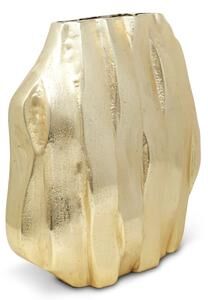
Classic Touch Gold Dimensional Vase"This majestic gold dimensional hexagon vase is the perfect statement piece for any home décor. It features a striking gold design, sure to add an elegant touch to any room. Make a statement with this beautiful vase. Measures: 11""W x 11.5""H"72,49 $*Shipping: 0,00 $Secure redirect to the provider
-
"Dimensional Crystal Vase, 5""H"Expertly crafted and designed, this crystal bud vase features a dimensional design that adds a touch of elegance to any space. Made of high-quality crystal, this vase is both beautiful and functional, perfect for displaying your favorite flowers.61,10 $*Shipping: 0,00 $Secure redirect to the provider
-
Is two-dimensional life possible?
Two-dimensional life as we typically think of it, with beings existing solely in a flat plane, is not possible based on our current understanding of physics and biology. Life as we know it requires a certain level of complexity and three-dimensional structure to function. However, it is theoretically possible to imagine simpler forms of life existing in a two-dimensional world, such as patterns or structures that can interact and evolve within a flat surface. **
-
What is a two-dimensional perspective?
A two-dimensional perspective refers to a way of representing objects or scenes on a flat surface, such as a piece of paper or a computer screen. This type of perspective lacks depth and only shows the length and width of objects, without representing their height or depth. It is commonly used in art, design, and graphics to create visual representations of objects and scenes. In a two-dimensional perspective, objects are typically depicted using techniques such as foreshortening, overlapping, and perspective to create the illusion of depth and distance. **
-
Should a one-dimensional or two-dimensional array be used for world coordinates?
A two-dimensional array should be used for world coordinates. World coordinates typically involve representing points in a two-dimensional space, such as on a map or a grid. Using a two-dimensional array allows for easy representation and manipulation of these coordinates, with each element in the array representing a specific point in the world. This makes it easier to perform operations such as finding neighboring points, calculating distances, and visualizing the world space. **
-
How can a two-dimensional array be converted into a one-dimensional array?
To convert a two-dimensional array into a one-dimensional array, you can simply concatenate all the rows of the two-dimensional array into a single row. This can be done by iterating through each row of the two-dimensional array and appending its elements to the one-dimensional array. Alternatively, you can use built-in functions or methods provided by programming languages to flatten the two-dimensional array into a one-dimensional array. **
Similar search terms for Two-dimensional
-
Alexander Home Heather Medallion Dimensional Area RugLight, serene, and breezy, this rug is power-loomed of polypropylene and polyester on a jute backing for wonderful durability. The airy and ethereal neutral color palette and motifs bring a casually elegant look to any decor for maximum designer...36,17 $*Shipping: 0,00 $Secure redirect to the provider
-
Jenny Silks Succulents in White Dimensional PlanterCeramic brings a clean foundation to this artificial succulent arrangement, pairing a white faceted planter with layered greenery. Multiple succulent forms create varied shapes, while green leaves and yellow-tipped rosettes add a fresh mix of color.243,49 $*Shipping: 0,00 $Secure redirect to the provider
-
Alexander Home Heather Medallion Dimensional Area RugLight, serene, and breezy, this rug is power-loomed of polypropylene and polyester on a jute backing for wonderful durability. The airy and ethereal neutral color palette and motifs bring a casually elegant look to any decor for maximum designer...157,22 $*Shipping: 0,00 $Secure redirect to the provider
-
How do you calculate the paths between vectors in a two-dimensional force field?
To calculate the paths between vectors in a two-dimensional force field, you can use the concept of line integrals. First, you need to parameterize the path between the two vectors using a parameter t. Then, you can calculate the line integral of the force field along the parameterized path. This involves taking the dot product of the force field vector and the tangent vector to the path, and integrating with respect to the parameter t. The result will give you the work done by the force field along the path between the two vectors. **
-
Is a shadow two- or three-dimensional?
A shadow is two-dimensional. It is the result of an object blocking light and creating a silhouette on a surface. A shadow does not have depth or volume, so it is considered to be two-dimensional. It only represents the outline or shape of the object that is blocking the light. **
-
Are complex numbers real two-dimensional vectors?
No, complex numbers are not real two-dimensional vectors. While complex numbers can be represented as points in a two-dimensional plane, they are not the same as two-dimensional vectors. Complex numbers have both a real and imaginary component, while two-dimensional vectors typically have both magnitude and direction. Additionally, complex numbers have their own operations and properties that are distinct from those of two-dimensional vectors. **
-
How do you calculate the cross product of two two-dimensional vectors?
To calculate the cross product of two two-dimensional vectors, you first need to extend the vectors into three dimensions by adding a zero as the third component. Then, you can calculate the cross product using the formula: \( \text{cross product} = (a_1b_2 - a_2b_1) \hat{k} \), where \( a_1 \) and \( a_2 \) are the components of the first vector, \( b_1 \) and \( b_2 \) are the components of the second vector, and \( \hat{k} \) is the unit vector in the z-direction. The resulting cross product will be a vector perpendicular to the plane formed by the original two vectors. **
* All prices are inclusive of VAT and, if applicable, plus shipping costs. The offer information is based on the details provided by the respective shop and is updated through automated processes. Real-time updates do not occur, so deviations can occur in individual cases. ** Note: Parts of this content were created by AI.