Buy radwege.eu ?
We are moving the project
radwege.eu .
Are you interested in purchasing the domain
radwege.eu ?
domain@kv-gmbh.de · 0541-91531010
Buy radwege.eu ?
How can I plan cycling routes with komoot?
To plan cycling routes with komoot, you can start by entering your starting point and destination in the app or website. Komoot will then suggest a route based on your preferences such as road cycling, mountain biking, or touring. You can customize your route by adding waypoints, avoiding certain types of terrain, or selecting specific points of interest along the way. Once you are satisfied with your route, you can save it, download it to your GPS device, or share it with others. **
Is cycling really that complicated?
Cycling itself is not inherently complicated, as it is a simple and natural form of transportation and exercise. However, there are various aspects of cycling that can become more complicated depending on the individual's goals and interests. For example, competitive cycling involves complex training regimens, equipment choices, and race strategies. Overall, cycling can be as simple or as complicated as one chooses to make it. **


Similar search terms for That
Top-Angebote
Products related to That:
-
Tristan Gooley Wild Signs and Star Paths: 52 Keys That Will Open Your Eyes - Non Fiction - PaperbackTitle:. Wild Signs and Star Paths: 52 keys that will open your eyes Condition: BRAND NEW. Format: Paperback Overview:. Wild Signs and Star Paths invites you to slow down, look closely, and trust what you feel about the world around you. In 52 keys, Tristan Gooley distills decades of field observations into compact, practical prompts that train you to notice what others pass by on daily walks. From the night sky to the leaf’s subtle tilt in the breeze, each key is a doorway to a sharper sense of place. This is more than a guide to navigation; it’s a portable manual for developing outdoor literacy — the skill to sense direction from stars and trees, to forecast weather from woodland sounds, and to read an animal’s next move from its body language. The writing is lucid, a blend of natural history, craft, and storytelling, designed to be revisited again and again. Whether you’re a weekend wanderer, a parent with curious children, or a seasoned hiker seeking a deeper connection with place, this paperback edition makes Gooley’s approach accessible and enjoyable. By the end, you’ll find the world around you more legible, more mysterious, and inviting of exploration. What Makes This Book Stand Out:. Gooley’s gift is turning observation into a practical, repeatable skill. The 52 keys present bite-sized, action-ready ideas rather than dense theory, making it simple to apply on a trail, in the garden, or during a city stroll. The book weaves star-path navigation with terrestrial signs—wind patterns, plant behavior, animal cues—so you gain a robust toolkit for both day and night. It’s not a mere collection of trivia; it’s a coherent philosophy of attention that trains you to read landscapes with confidence. The tone is warm and encouraging, never prescriptive, with each key building a habit you can carry forward. Expect precise description, lyrical precision, and a pace that suits casual reading and field reference alike. This isn’t about gadgets; it’s about reliably perceiving what nature has already offered you every time you step outside. Who This Book Is Perfect For:. Ideal for nature lovers, walkers, hikers, and the endlessly curious, this is a non-fiction title that speaks to beginners and seasoned outdoorspeople alike. It suits anyone who wants to sharpen observational skills without jargon, from families seeking engaging weekend activities to educators incorporating real-world nature learning into the classroom. It’s a thoughtful gift for readers who value mindfulness, geography, and natural history, and for those who want a portable guide to interpreting the living world on every outing. The compact paperback is easy to slip into a backpack or a tote for urban explorations as well as country rambles. If you’re after a book that makes each walk a little more illuminating, this is the one to reach for. Key Highlights:. 52 practical keys to sharpen outdoor perception. Learn to sense direction from stars and landscape cues. Forecast weather from...99,99 £*Shipping: 0,00 £Secure redirect to the provider
-
That Sound Game That Brick Game - Building Site Stacking Game - Dexterity ChallengeWelcome to a lively building-site challenge where every roll of the dice changes the plan. In That Brick Game, players take on the role of Builders competing to create stacks of bricks while avoiding hazards and passing trouble to their opponents. This fast, physical stacking game combines dexterity, decision-making, and playful sabotage. Players must follow the dice, manage their growing piles, and try to leave the smallest amount of rubble when the final brick is laid. The changing instructions keep each round unpredictable, encouraging players to adapt quickly and watch what everyone else is building. How to play: Roll the dice to determine the next building action. Stack bricks and respond to the hazards shown. Use the rules to disrupt other Builders where possible. Compare the remaining rubble when construction ends. A compact choice for game nights, That Brick Game offers an energetic tabletop experience for players who enjoy hands-on challenges and a little bit of friendly competition.16,99 £*Shipping: 3,95 £Secure redirect to the provider
-
Moonstone What Feeling Is That?Title:. What Feeling Is That?. Condition :BRAND NEW. Format :BoardBook. ISBN:9789370034303. Overview:. Understanding emotions is one of the most vital skills a child can develop, and What Feeling Is That? serves as a brilliantly accessible guide to help little ones navigate their inner world. Authored by neuroscientist and children's writer Rupa Huq, this thoughtfully crafted book transforms the complex task of emotional literacy into an engaging, age-appropriate journey. Designed specifically for toddlers and pre-readers, the book tackles common yet challenging feelings through clear, simple language and vibrant storytelling. Instead of overwhelming young minds with psychological jargon, this title meets developmental needs at their level, making it an essential resource for families navigating tantrums, separations, new friendships, and everyday sensory experiences. Buying this book provides parents, carers, and early years practitioners with a ready-made framework for having sensitive conversations. Whether used as a calm-down companion during emotional outbursts or as a gentle daytime exploration tool, it lays the groundwork for resilience, self-awareness, and healthy communication. By naming feelings as they arise, children learn that every emotion is valid and manageable, turning potential meltdowns into meaningful learning moments.. What Makes This Book Stand Out:. Unlike standard behaviour charts or rigid rule-based children's books, What Feeling Is That? focuses entirely on internal states, giving space for nuanced, real-life experiences. Its standout feature is the clever, structured approach to introducing abstract concepts. Each spread isolates a specific feeling, pairing it with relatable scenarios that toddlers instantly recognise from their own lives. The dynamic artwork by celebrated illustrator Charlotte Voake plays a crucial role here; soft textures, expressive character designs, and carefully chosen colour palettes mirror the intensity and mood of each emotion. This visual storytelling ensures that even non-verbal children can point, engage, and process. Furthermore, the book avoids moralising—sadness isn't punished, anger isn't demonised, and happiness isn't treated as the only acceptable state. This balanced approach makes it exceptionally powerful for modern parenting and inclusive classroom settings where emotional safety takes priority over quick compliance.. Who This Book Is Perfect For:. This title is ideal for curious toddlers aged roughly two to five who are beginning to verbalise—or struggling to identify—their shifting moods. It is widely recommended by early years educators, speech and language therapists, and paediatric psychologists as a supplementary tool for social-emotional learning. Parents seeking screen-free downtime will appreciate how easily the pages integrate into bedtime routines or post-play wind-downs. Gift buyers will find it exceptionally well-suited for baby showers, first birthday celebrations,...2,99 £*Shipping: 2,99 £Secure redirect to the provider
-
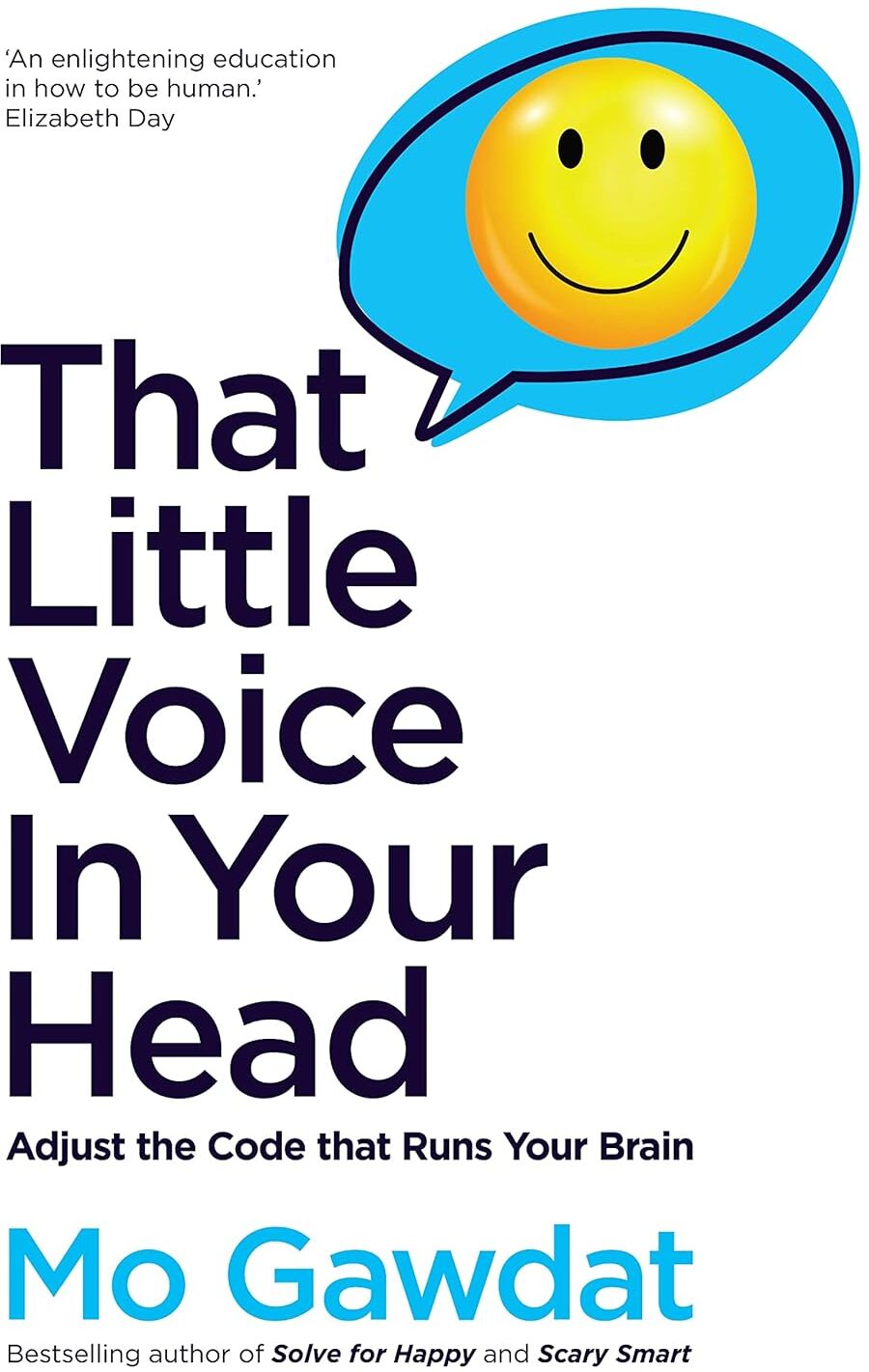
Bluebird That Little Voice In Your Head Book: Adjust the Code that Runs Your BrainThat Little Voice In Your Head: Adjust the Code that Runs Your Brain 'Everything he writes is an enlightening education in how to be human.' - Elizabeth Day That Little Voice in Your Head is the practical guide to retraining your brain for optimal joy by Mo Gawdat, the internationally bestselling author of Solve for Happy. Mo reveals how by beating negative self-talk, we can change our thought processes, turning our greed into generosity, our apathy into compassion and investing in our own happiness. To fix a machine, first you need to find out what’s wrong with it. To fix unhappiness, you need to find out what causes it. This book provides readers with exercises to help reshape their mental processes. Drawing on his expertise in programming and his knowledge of neuroscience, Mo explains how – despite their incredible complexity – our brains behave in ways that are largely predictable. From these insights, he delivers this user manual for happiness. Inspired by the life of his late son, Ali, Mo Gawdat has set out to share a model for happiness based on generosity and empathy towards ourselves and others. Using his experience as a former Google engineer and Chief Business Officer, Mo shares his 'code' for reprogramming our brain and moving away from the misconceptions modern life gives us.4,99 £*Shipping: 1,99 £Secure redirect to the provider


-
How can one get started with road cycling or gravel biking?
To get started with road cycling or gravel biking, it's important to first invest in a good quality bike that fits your body and riding style. Next, familiarize yourself with the rules of the road and safety precautions for cycling. It's also helpful to find a local cycling group or club to join for support and guidance. Start with shorter rides and gradually increase your distance and intensity as you build strength and confidence. Finally, don't forget to invest in proper cycling gear such as a helmet, padded shorts, and cycling shoes to ensure a comfortable and safe riding experience. **
-
What type of bike is suitable for forest trails or hilly, rocky paths?
A mountain bike is the most suitable type of bike for forest trails or hilly, rocky paths. Mountain bikes are designed with sturdy frames, wide tires with deep treads for better traction, and suspension systems to absorb shocks from rough terrain. They also have a wide range of gears to help navigate steep inclines and descents. Overall, mountain bikes are built to handle the challenges of off-road riding and provide a comfortable and stable ride on forest trails and hilly, rocky paths. **
-
How do you shift gears while cycling to pedal slowly or stop pedaling?
To shift gears while cycling to pedal slowly or stop pedaling, you need to first anticipate the need to change gears by assessing the terrain or your speed. Then, you can use the gear shifters on your bike to move the chain onto a larger sprocket at the rear and a smaller chainring at the front to make pedaling easier. This will allow you to pedal slowly or stop pedaling more comfortably without putting too much strain on your legs. Remember to shift gears smoothly and gradually to avoid damaging your bike's drivetrain. **
-
Is there a bicycle light that works independently of pedaling?
Yes, there are bicycle lights that work independently of pedaling. These lights are usually powered by batteries or rechargeable USB, and can be easily attached to the bike frame or handlebars. They provide visibility and safety for cyclists during low-light conditions or at night, without the need for pedaling to generate power. **


How can we ensure that our paths cross?
We can ensure that our paths cross by actively seeking out opportunities to connect with each other. This can include attending events or gatherings where we are likely to meet, reaching out to mutual connections to facilitate an introduction, or simply being open to new experiences and interactions. Additionally, maintaining open communication and being proactive in our efforts to connect with each other can help ensure that our paths cross. Ultimately, it requires a combination of intention, effort, and openness to create opportunities for our paths to intersect. **
What is the difference in calorie expenditure between road cycling and mountain biking?
The calorie expenditure for road cycling and mountain biking can vary based on factors such as intensity, terrain, and duration. Generally, road cycling on flat terrain at a moderate pace can burn around 400-600 calories per hour, while mountain biking on varied terrain with hills and obstacles can burn around 500-800 calories per hour. The higher calorie expenditure in mountain biking is due to the increased effort required to navigate the challenging terrain and obstacles. Overall, mountain biking tends to result in a higher calorie expenditure compared to road cycling. **
Top-Angebote
Products related to That:
-
RSPB What's That Guides Collection 3 Books Set By DK (RSPB What's that Bird?, What's that Flower?, What's that Tree?)Description. Condition: BRAND NEW. Format: Paperback. RSPB What's that Bird?:. Spot the difference! If you are not sure how to tell the difference between a swift or a swallow or shelduck from a shoveler, this bird guide is for you.Designed for beginners and more experienced birdwatchers alike, your DK bird book includes over 150 European birds and their distinguishing features.Authenticated by the Royal Society for the Protection of Birds (RSPB), the facts and illustrations included in this fascinating book will help you easily tell the difference between similar birds.. What's that Flower?:. Stop and smell the roses with this delightful flower spotter guide.Know your geraniums from your pansies! This beautiful flower identification book features over 150 British and European flower species along with a simple, visual approach to help you tell them apart with absolute ease.With its compact, portable format, this nature book is designed for ease of use anywhere - ideal for nature lovers everywhere.. What's that Tree?:. Learn more about the beautiful trees around you with this identification guide, perfect for beginners, featuring over 150 common British and European species.If you want to know the difference between a Serbian spruce and a silver birch or how different trees change through the seasons then What's that Tree? is the ideal guide for you. Species overviews show you what to look for where and related trees are shown side by side for quick comparison and identification.. Title. RSPB What's That Guides Collection 3 Books Set By DK (RSPB What's that Bird?, What's that Flower?, What's that Tree?). Delivery. Content. Reviews99,99 £*Shipping: 0,00 £Secure redirect to the provider
-
DK 3 Books Collection Set RSPB What's that Bird & What's that Flower, What's that TreeDescription:. Condition: BRAND NEW. Format: Paperback. RSPB What's that Bird?: The Simplest ID Guide Ever. Designed for beginners and more experienced birdwatchers alike, your DK bird book includes over 150 European birds and their distinguishing features. Authenticated by the Royal Society for the Protection of Birds (RSPB), the facts and illustrations included in this fascinating book will help you easily tell the difference between similar birds.. What's that Flower?: The Simplest ID Guide Ever. Detailed text, beautiful photographs and stunning illustrations show different parts of the flower - from the stem to the petals. Flower type overviews show you what to look for where and similar flowers are shown side by side for quick comparison and identification.. What's that Tree?: The Simplest ID Guide Ever. If you want to know the difference between a Serbian spruce and a silver birch or how different trees change through the seasons then What's that Tree? is the ideal guide for you. Species overviews show you what to look for where and related trees are shown side by side for quick comparison and identification.. Title. DK 3 Books Collection Set RSPB What's that Bird & What's that Flower, What's that Tree. Delivery. Content. Reviews28,99 £*Shipping: 2,99 £Secure redirect to the provider
-
Tristan Gooley Wild Signs and Star Paths: 52 Keys That Will Open Your Eyes - Non Fiction - PaperbackTitle:. Wild Signs and Star Paths: 52 keys that will open your eyes Condition: BRAND NEW. Format: Paperback Overview:. Wild Signs and Star Paths invites you to slow down, look closely, and trust what you feel about the world around you. In 52 keys, Tristan Gooley distills decades of field observations into compact, practical prompts that train you to notice what others pass by on daily walks. From the night sky to the leaf’s subtle tilt in the breeze, each key is a doorway to a sharper sense of place. This is more than a guide to navigation; it’s a portable manual for developing outdoor literacy — the skill to sense direction from stars and trees, to forecast weather from woodland sounds, and to read an animal’s next move from its body language. The writing is lucid, a blend of natural history, craft, and storytelling, designed to be revisited again and again. Whether you’re a weekend wanderer, a parent with curious children, or a seasoned hiker seeking a deeper connection with place, this paperback edition makes Gooley’s approach accessible and enjoyable. By the end, you’ll find the world around you more legible, more mysterious, and inviting of exploration. What Makes This Book Stand Out:. Gooley’s gift is turning observation into a practical, repeatable skill. The 52 keys present bite-sized, action-ready ideas rather than dense theory, making it simple to apply on a trail, in the garden, or during a city stroll. The book weaves star-path navigation with terrestrial signs—wind patterns, plant behavior, animal cues—so you gain a robust toolkit for both day and night. It’s not a mere collection of trivia; it’s a coherent philosophy of attention that trains you to read landscapes with confidence. The tone is warm and encouraging, never prescriptive, with each key building a habit you can carry forward. Expect precise description, lyrical precision, and a pace that suits casual reading and field reference alike. This isn’t about gadgets; it’s about reliably perceiving what nature has already offered you every time you step outside. Who This Book Is Perfect For:. Ideal for nature lovers, walkers, hikers, and the endlessly curious, this is a non-fiction title that speaks to beginners and seasoned outdoorspeople alike. It suits anyone who wants to sharpen observational skills without jargon, from families seeking engaging weekend activities to educators incorporating real-world nature learning into the classroom. It’s a thoughtful gift for readers who value mindfulness, geography, and natural history, and for those who want a portable guide to interpreting the living world on every outing. The compact paperback is easy to slip into a backpack or a tote for urban explorations as well as country rambles. If you’re after a book that makes each walk a little more illuminating, this is the one to reach for. Key Highlights:. 52 practical keys to sharpen outdoor perception. Learn to sense direction from stars and landscape cues. Forecast weather from...99,99 £*Shipping: 0,00 £Secure redirect to the provider
-
That Sound Game That Brick Game - Building Site Stacking Game - Dexterity ChallengeWelcome to a lively building-site challenge where every roll of the dice changes the plan. In That Brick Game, players take on the role of Builders competing to create stacks of bricks while avoiding hazards and passing trouble to their opponents. This fast, physical stacking game combines dexterity, decision-making, and playful sabotage. Players must follow the dice, manage their growing piles, and try to leave the smallest amount of rubble when the final brick is laid. The changing instructions keep each round unpredictable, encouraging players to adapt quickly and watch what everyone else is building. How to play: Roll the dice to determine the next building action. Stack bricks and respond to the hazards shown. Use the rules to disrupt other Builders where possible. Compare the remaining rubble when construction ends. A compact choice for game nights, That Brick Game offers an energetic tabletop experience for players who enjoy hands-on challenges and a little bit of friendly competition.16,99 £*Shipping: 3,95 £Secure redirect to the provider
-
How can I plan cycling routes with komoot?
To plan cycling routes with komoot, you can start by entering your starting point and destination in the app or website. Komoot will then suggest a route based on your preferences such as road cycling, mountain biking, or touring. You can customize your route by adding waypoints, avoiding certain types of terrain, or selecting specific points of interest along the way. Once you are satisfied with your route, you can save it, download it to your GPS device, or share it with others. **
-
Is cycling really that complicated?
Cycling itself is not inherently complicated, as it is a simple and natural form of transportation and exercise. However, there are various aspects of cycling that can become more complicated depending on the individual's goals and interests. For example, competitive cycling involves complex training regimens, equipment choices, and race strategies. Overall, cycling can be as simple or as complicated as one chooses to make it. **
-
How can one get started with road cycling or gravel biking?
To get started with road cycling or gravel biking, it's important to first invest in a good quality bike that fits your body and riding style. Next, familiarize yourself with the rules of the road and safety precautions for cycling. It's also helpful to find a local cycling group or club to join for support and guidance. Start with shorter rides and gradually increase your distance and intensity as you build strength and confidence. Finally, don't forget to invest in proper cycling gear such as a helmet, padded shorts, and cycling shoes to ensure a comfortable and safe riding experience. **
-
What type of bike is suitable for forest trails or hilly, rocky paths?
A mountain bike is the most suitable type of bike for forest trails or hilly, rocky paths. Mountain bikes are designed with sturdy frames, wide tires with deep treads for better traction, and suspension systems to absorb shocks from rough terrain. They also have a wide range of gears to help navigate steep inclines and descents. Overall, mountain bikes are built to handle the challenges of off-road riding and provide a comfortable and stable ride on forest trails and hilly, rocky paths. **
Similar search terms for That
-
Moonstone What Feeling Is That?Title:. What Feeling Is That?. Condition :BRAND NEW. Format :BoardBook. ISBN:9789370034303. Overview:. Understanding emotions is one of the most vital skills a child can develop, and What Feeling Is That? serves as a brilliantly accessible guide to help little ones navigate their inner world. Authored by neuroscientist and children's writer Rupa Huq, this thoughtfully crafted book transforms the complex task of emotional literacy into an engaging, age-appropriate journey. Designed specifically for toddlers and pre-readers, the book tackles common yet challenging feelings through clear, simple language and vibrant storytelling. Instead of overwhelming young minds with psychological jargon, this title meets developmental needs at their level, making it an essential resource for families navigating tantrums, separations, new friendships, and everyday sensory experiences. Buying this book provides parents, carers, and early years practitioners with a ready-made framework for having sensitive conversations. Whether used as a calm-down companion during emotional outbursts or as a gentle daytime exploration tool, it lays the groundwork for resilience, self-awareness, and healthy communication. By naming feelings as they arise, children learn that every emotion is valid and manageable, turning potential meltdowns into meaningful learning moments.. What Makes This Book Stand Out:. Unlike standard behaviour charts or rigid rule-based children's books, What Feeling Is That? focuses entirely on internal states, giving space for nuanced, real-life experiences. Its standout feature is the clever, structured approach to introducing abstract concepts. Each spread isolates a specific feeling, pairing it with relatable scenarios that toddlers instantly recognise from their own lives. The dynamic artwork by celebrated illustrator Charlotte Voake plays a crucial role here; soft textures, expressive character designs, and carefully chosen colour palettes mirror the intensity and mood of each emotion. This visual storytelling ensures that even non-verbal children can point, engage, and process. Furthermore, the book avoids moralising—sadness isn't punished, anger isn't demonised, and happiness isn't treated as the only acceptable state. This balanced approach makes it exceptionally powerful for modern parenting and inclusive classroom settings where emotional safety takes priority over quick compliance.. Who This Book Is Perfect For:. This title is ideal for curious toddlers aged roughly two to five who are beginning to verbalise—or struggling to identify—their shifting moods. It is widely recommended by early years educators, speech and language therapists, and paediatric psychologists as a supplementary tool for social-emotional learning. Parents seeking screen-free downtime will appreciate how easily the pages integrate into bedtime routines or post-play wind-downs. Gift buyers will find it exceptionally well-suited for baby showers, first birthday celebrations,...2,99 £*Shipping: 2,99 £Secure redirect to the provider
-
Bluebird That Little Voice In Your Head Book: Adjust the Code that Runs Your BrainThat Little Voice In Your Head: Adjust the Code that Runs Your Brain 'Everything he writes is an enlightening education in how to be human.' - Elizabeth Day That Little Voice in Your Head is the practical guide to retraining your brain for optimal joy by Mo Gawdat, the internationally bestselling author of Solve for Happy. Mo reveals how by beating negative self-talk, we can change our thought processes, turning our greed into generosity, our apathy into compassion and investing in our own happiness. To fix a machine, first you need to find out what’s wrong with it. To fix unhappiness, you need to find out what causes it. This book provides readers with exercises to help reshape their mental processes. Drawing on his expertise in programming and his knowledge of neuroscience, Mo explains how – despite their incredible complexity – our brains behave in ways that are largely predictable. From these insights, he delivers this user manual for happiness. Inspired by the life of his late son, Ali, Mo Gawdat has set out to share a model for happiness based on generosity and empathy towards ourselves and others. Using his experience as a former Google engineer and Chief Business Officer, Mo shares his 'code' for reprogramming our brain and moving away from the misconceptions modern life gives us.4,99 £*Shipping: 1,99 £Secure redirect to the provider
-
That Little Voice In Your Head: Adjust the Code That Runs Your Brain By Mo GawdatDescription:. Condition: BRAND NEW. Format: Paperback. That Little Voice in Your Head is the practical guide to retraining your brain for optimal joy by Mo Gawdat, the internationally bestselling author of Solve for Happy. Mo reveals how by beating negative self-talk, we can change our thought processes, turning our greed into generosity, our apathy into compassion and investing in our own happiness.. This book provides readers with exercises to help reshape their mental processes. Drawing on his expertise in programming and his knowledge of neuroscience, Mo explains how – despite their incredible complexity – our brains behave in ways that are largely predictable. From these insights, he delivers this user manual for happiness.. Inspired by the life of his late son, Ali, Mo Gawdat has set out to share a model for happiness based on generosity and empathy towards ourselves and others. Using his experience as a former Google engineer and Chief Business Officer, Mo shares his 'code' for reprogramming our brain and moving away from the misconceptions modern life gives us.. Title. That Little Voice In Your Head: Adjust the Code That Runs Your Brain By Mo Gawdat. Delivery. Content. Reviews7,99 £*Shipping: 2,99 £Secure redirect to the provider
-
Scholastic Things That Go Value PackBeep! Beep! Make way for these fun vehicle reads, and then have a go at the 56-page activity book that can be used over and over again.This set includes:Duck on a BikeI SPY Things That GoThere Was an Old Lady Who Swallowed a TruckThings That Go...26,99 $*Shipping: 0,00 $Secure redirect to the provider
-
How do you shift gears while cycling to pedal slowly or stop pedaling?
To shift gears while cycling to pedal slowly or stop pedaling, you need to first anticipate the need to change gears by assessing the terrain or your speed. Then, you can use the gear shifters on your bike to move the chain onto a larger sprocket at the rear and a smaller chainring at the front to make pedaling easier. This will allow you to pedal slowly or stop pedaling more comfortably without putting too much strain on your legs. Remember to shift gears smoothly and gradually to avoid damaging your bike's drivetrain. **
-
Is there a bicycle light that works independently of pedaling?
Yes, there are bicycle lights that work independently of pedaling. These lights are usually powered by batteries or rechargeable USB, and can be easily attached to the bike frame or handlebars. They provide visibility and safety for cyclists during low-light conditions or at night, without the need for pedaling to generate power. **
-
How can we ensure that our paths cross?
We can ensure that our paths cross by actively seeking out opportunities to connect with each other. This can include attending events or gatherings where we are likely to meet, reaching out to mutual connections to facilitate an introduction, or simply being open to new experiences and interactions. Additionally, maintaining open communication and being proactive in our efforts to connect with each other can help ensure that our paths cross. Ultimately, it requires a combination of intention, effort, and openness to create opportunities for our paths to intersect. **
-
What is the difference in calorie expenditure between road cycling and mountain biking?
The calorie expenditure for road cycling and mountain biking can vary based on factors such as intensity, terrain, and duration. Generally, road cycling on flat terrain at a moderate pace can burn around 400-600 calories per hour, while mountain biking on varied terrain with hills and obstacles can burn around 500-800 calories per hour. The higher calorie expenditure in mountain biking is due to the increased effort required to navigate the challenging terrain and obstacles. Overall, mountain biking tends to result in a higher calorie expenditure compared to road cycling. **
* All prices are inclusive of VAT and, if applicable, plus shipping costs. The offer information is based on the details provided by the respective shop and is updated through automated processes. Real-time updates do not occur, so deviations can occur in individual cases. ** Note: Parts of this content were created by AI.